
Barbour County Tax Record Fields
Every tax ticket in Barbour County joins two things. One is a parcel's taxable assessment. The other is its billing history. That pairing answers practical questions, covering whether a ticket is current and what value sits on the roll. How is the land identified for collection? Match entries with the map-parcel number and legal description. Names and mailing addresses change over time. Tax entries describe administration and payment. They do not establish ownership or replace the filed deed. Always compare the same record year, because annual rolls and bills reflect different points in the local cycle.
| Record field | What it shows | Where to check |
|---|---|---|
| Appraised value | Annual market-value estimate for assessment | Assessor map card |
| Assessed value | Tax base calculated at 60% of appraised value | Assessor records |
| Tax class | Use and municipal category for levy treatment | Assessor roll |
| Total billed / paid | Charges and posted payments for a ticket year | Sheriff Tax Inquiry |
| First half / second half | Installment amounts and current balance | Sheriff Tax Inquiry |
| Delinquent status | Tax status or sale context when shown | Tax inquiry and Sheriff |
| Exemption | Homestead or disability status where approved | Assessor office |
Value and billing are separate numbers. A change in assessed value shifts the tax calculation, while a payment changes the amount due. Check the year on any record.
Look Up a Barbour County Tax Ticket
Start with the Barbour County Tax Inquiry and pick a year and record type. Search by ticket or name when you know one. Use the map-parcel for one piece of land. The results grid spells out the details. Columns include Year, Type, Ticket, Name, Total Paid, Total Billed, First Half, Second Half, Total Due, Account No, Map-Parcel, Description, and Billing Address.
- Start with a parcel number from the Assessor or GIS, keeping leading zeroes and suffix digits.
- Choose the tax year and type, then open the matching ticket row.
- Compare the Map-Parcel and Description to the land record, not only the billing name.
- Read each amount separately: billed, paid, first half, second half, and total due.
- Call the Sheriff Tax Office before payment if the parcel, year, or posted amount is unclear.
The county tax inquiry shows its headings only. No populated example row appears. Online payment is accepted with a 2.3 percent surcharge, so confirm posting with the office if a saved screen and the current balance differ.
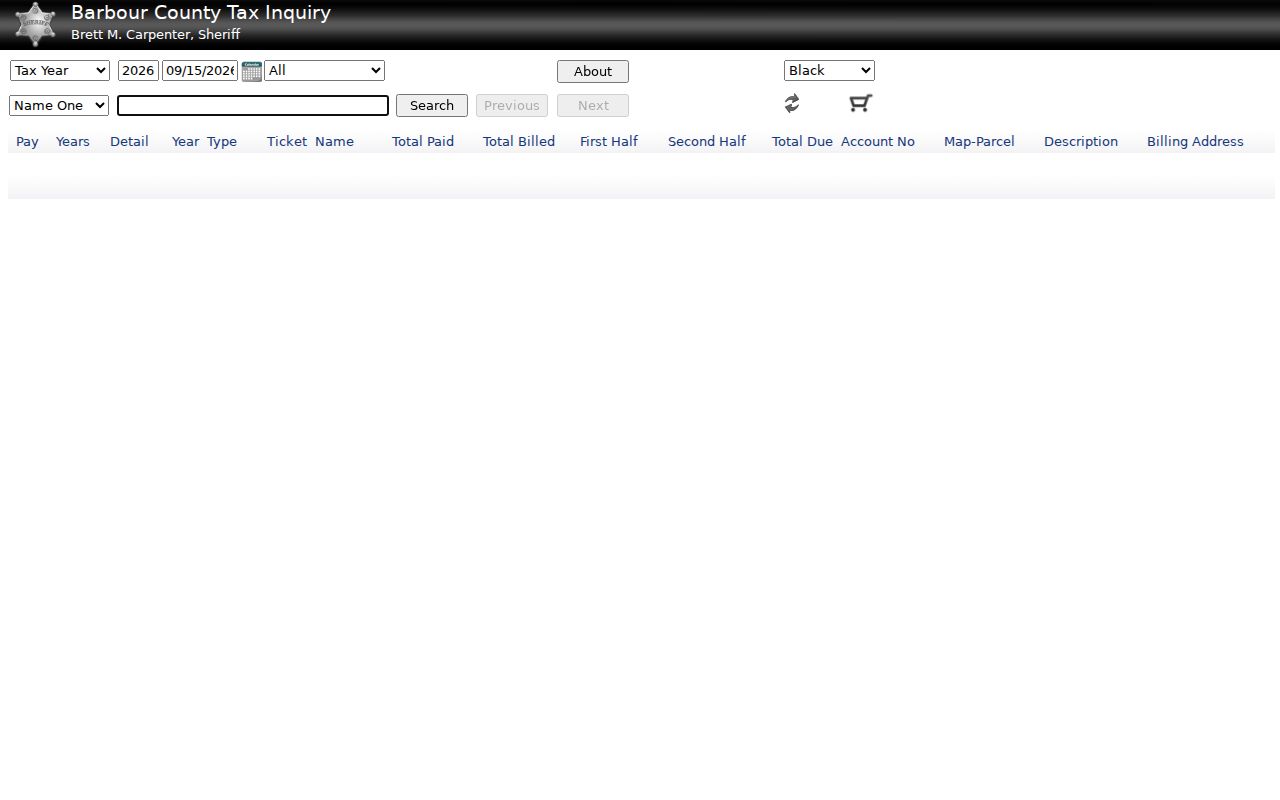
The highlighted fields tie each ticket to a parcel. Use the live row for current amounts and call the office about any mismatch.
Barbour County 60 Percent Assessment
The Assessor's formula is plain: appraised value times 60 percent gives assessed value, and the levy rate then produces the tax. The ratio is statewide, not a sale-price estimate. The county's Assessor page lists the rule with its annual assessment duties.
The office must set accurate annual market values. Each real-estate parcel gets a visit at least once every three years. Tax maps and property records stay public. The Assessor also runs a sales-ratio analysis. Prior-year transfers are reported by December 1. That duty explains why a card shows an annual value even without a new sale that year. The Assessor's official page states these duties and the value calculation.
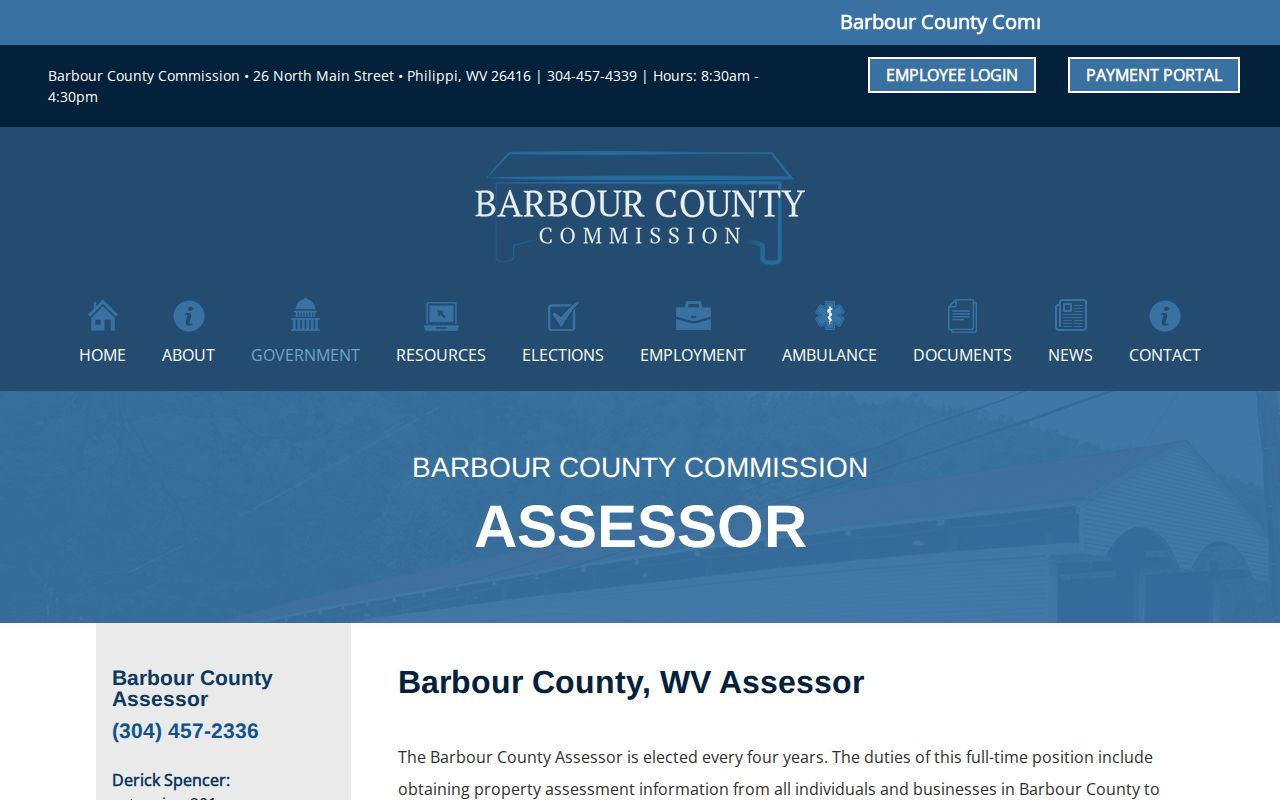
Read appraised and assessed values as separate fields. If the figures break the formula, ask the Assessor about the year. Ask about any exemption or adjustment shown.
A sale price in a deed is a transaction fact. Date, terms, condition, and parcel scope can all differ. That figure may not match the annual appraised value. The property value page explains these value types separately.
Barbour County Assessment Classes
West Virginia sorts property into classes by use and municipal location. Class II covers residential property and farms used by the owner. Class III is everything else outside a municipality. Class IV is other property inside a municipality, including rental or vacant property that is not owner-occupied. Confirm the class with the Assessor.
The class matters because levy treatment follows it. Read a tax bill with its parcel and use, not against a different class or town. Postal city names can mislead. GIS or E911 can test whether a parcel sits inside an incorporated boundary. The county's assessment record confirms the roll entry.
The Assessor also decides homestead and disability exemption eligibility. An exemption can change taxable treatment without touching the deed or parcel boundary.
Barbour County Assessment Calendar
The county publishes a compact annual schedule. Books close January 30 for the prior year. The Board of Equalization and Review gets them by February 1. Certified values follow by March 3. Transfers from the prior year are reported by December 1. These dates frame the administrative cycle, not the average gap between a closing and an owner-field change.
Call the Assessor about a value before trusting a portal card. No appeal form appears online. No separate local deadline exists beyond the Board review calendar. Ask how to request review, what material is accepted, and whether an appointment or form is needed. Never borrow a deadline from another West Virginia county.
Check the year and parcel first. Two values may not conflict, since a new deed can reach the Clerk index before the next annual roll is ready.
Barbour County Exemptions and Review
Homestead and disability exemptions go through the Assessor. Ask the office which exemption fits your account. Ask what proof it needs, and whether it already appears on the parcel record. Bring the parcel number when you call. An exemption changes the assessment, not the title.
A dispute over an assessed amount goes to the Board of Equalization and Review. The county calendar sets February 1 as the cutoff. Call the Assessor at (304) 457-2336 before the review period opens. Ask what the current process requires. The form, appointment steps, and evidence standard all come from the office. Keep the parcel number, the assessment year, and any sales facts ready for the hearing.
Appraised value, market estimates, and a deed's sale consideration answer different questions. See the Barbour County property value explanation for those distinctions.
Barbour County Delinquency Dates
Current Barbour County tax bills are mailed July 15. The first-half discount ends September 1. That half turns delinquent on October 1. Second-half discounts run through March 1, with delinquency following on April 1. Anything unpaid at close of business April 30 is published with added fees, and the annual land sale follows that publication.
The Sheriff Tax Office posts a 2.3 percent surcharge on online payments. Redemption questions go to the West Virginia State Auditor. The office phone is (304) 457-2881, posted hours run 8:30 a.m. to 4:15 p.m., and a call ahead confirms current operations before you travel.
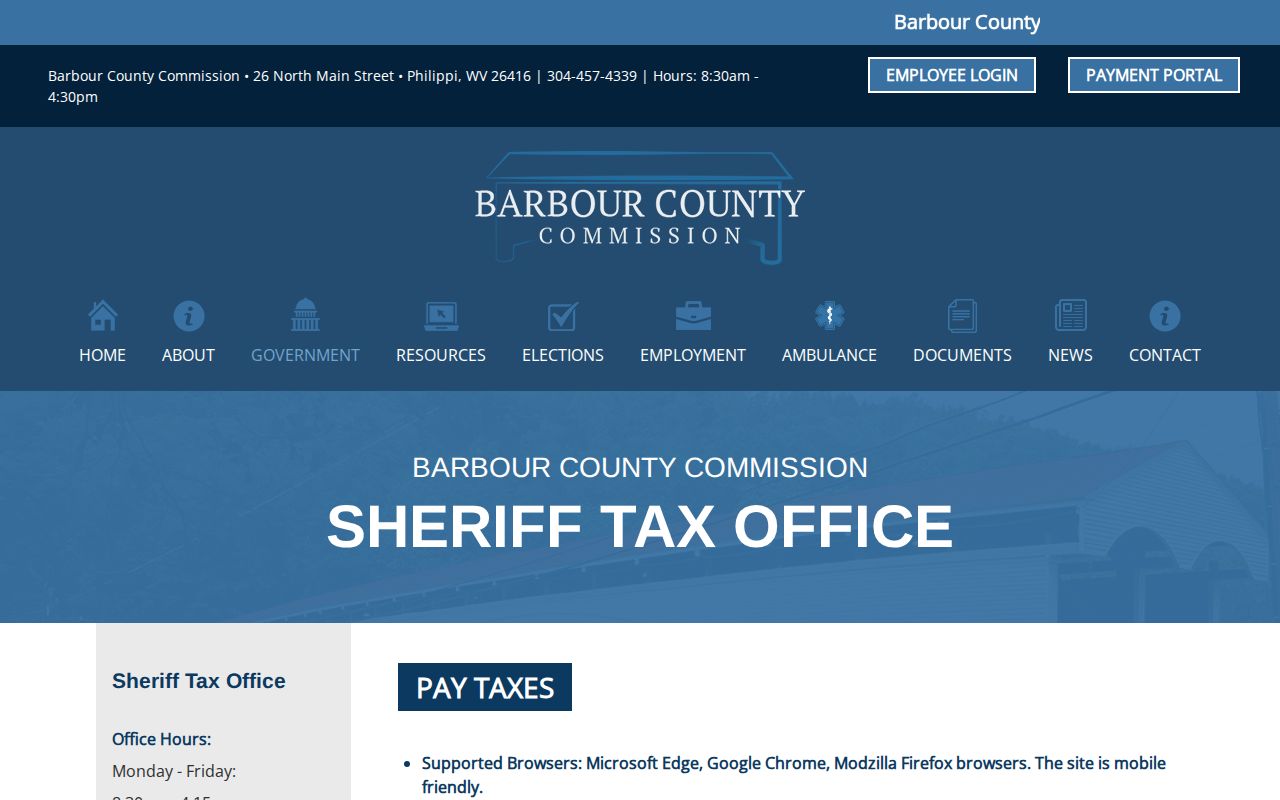
The image highlights the annual timing and the payment route. Account-specific amounts still come from the tax inquiry.
Barbour County Land Sale and Redemption
Once unpaid taxes are published, a parcel can move into the annual land-sale process. Redemption is separate. That step runs through the State Auditor. The county page lists the Sheriff's tax services, while the Auditor handles redemption contacts. W. Va. Code chapter 11A governs tax-sale notices and deeds. A delinquent flag in the tax inquiry is an alert, not a full history of notice, sale, or redemption.
For a parcel on a sale list, verify the legal description, map-parcel number, owner, notice, and any later Clerk instrument. Ask the Sheriff Tax Office whether the account is current, and ask the Auditor about redemption status. The county publishes no online sale list or foreclosure calendar, so the office route is essential.
A tax-sale deed is not an ordinary purchase deed. Check the recorded notices and the statutory process first. Draw conclusions about the current owner only after that review.
Separate Barbour County Billing Address
The Tax Inquiry carries both a Billing Address column and a Map-Parcel column. The two answer different questions. The billing address says where the tax bill is sent. The map-parcel ties the account to the land itself. The statewide GIS viewer opens with a physical address. Its detailed panel may show a different owner mailing address. A billing name can be a taxpayer or contact rather than the latest grantee.
When the names differ, compare the tax account with the newest recorded deed. Also check the Assessor owner field. Keep the assessment year and transfer date in view. The roll is annual. No county-specific closing-to-roll lag is stated. For a Philippi, Belington, or Junior postal address, test the municipal boundary in GIS. Don't assume the ZIP sets permit jurisdiction.
Use Barbour County tax records for tax status and assessment details. The deed and parcel description settle title and land identity.