
Barbour County Deed Record Types
Deed records in Barbour County do more than list who sold what. Each recorded instrument carries the legal description of the land. That description is what ties a transfer to a specific parcel. Start with a grantor or grantee name, a date range, or a prior instrument reference. Then compare what you find against the current parcel. The index is only a finding aid. The recorded document itself supplies the signatures, terms, and full land description. An online property search can fall short. Ask the custodian to help locate the book, page, or instrument through the proper public-record channel.
| Instrument | What it does | Common reason to check it |
|---|---|---|
| Warranty or special warranty deed | Conveys a described estate with stated covenants | Identify the grantee and land conveyed. |
| Quitclaim deed | Transfers whatever interest the grantor has, without broad title promises | Review an estate, family, or corrective transfer. |
| Deed of trust | Creates a recorded security interest tied to a loan | Look for later release or assignment. |
| Release or satisfaction | Records that a lien or security instrument was released | Match it to the original book/page. |
| Plat or easement | Shows lots, access, or a right-of-way description | Trace a subdivision lot or access route. |
| Tax-sale deed | Records a conveyance after the statutory tax-sale process | Check notices, redemption, and the parcel description. |
A deed proves a transfer happened. But the name alone tells you little. Read the whole legal description, and search the related releases, judgments, and estate instruments that shape the parcel's history.
Search the Barbour County Index
A grantor conveys an interest in land. A grantee receives it. Search the grantor-grantee index in both directions, because one deed's grantee often becomes the next deed's grantor. The county links its Document Inquiry for online use. The County Clerk can explain exactly which fields, spellings, date filters, and document types the search supports, so ask before assuming a menu works a certain way.
Start from an address instead. Pull the parcel key and legal description from the Assessor or GIS map first, then ask the Clerk to search the grantor and grantee indexes for that land and its tied names. Working from a person's name? Try spelling variants and initials, and compare the legal description rather than accepting every same-name hit. The recorded book or image is the source that verifies a match. Nothing else carries the same weight in Barbour County deed records.
- Copy the legal description and map-parcel from an assessor card or deed already in hand.
- Search the current owner as grantee to locate the acquisition deed, then as grantor to find a later transfer.
- Record the instrument date, filing reference, parties, deed type, and complete land description.
- Search related deeds of trust, releases, plats, liens, and estate filings when they fit the parcel history.
- Ask the Clerk for the image or book copy when the result is not online or the description is unclear.
- Grantor
- The person or entity conveying an interest.
- Grantee
- The person or entity receiving an interest.
- Chain of title
- The linked sequence of recorded transfers for the same land.
- Book and page
- A volume reference used to locate a recorded instrument.
Barbour County Deed Book References
A book and page reference is the bridge between an index entry and the instrument itself. Court citations use this format too. A 2011 West Virginia Supreme Court memorandum decision cites "Barbour County Deed Book 447, Page 100." That citation shows how judges point to recorded deeds. It is a real local example, though it says nothing about the county's full online coverage or any current parcel.
When a citation lands in your hands, write down the county, book, page, and document date. Ask the Clerk whether that book exists as a bound volume, a scan, or another copy. Then read the whole instrument: grantor, grantee, execution and recording dates, legal description, acknowledgments, and any plat or prior deed it references. An older legal description may name a tract, a stream, an adjoining owner, or a subdivision lot rather than a street address.
Work backward with the same description. A book reference plus a parcel description can separate two people who share a name. That helps when an online result stays uncertain. For a longer ownership history, the Barbour County former-owner chain method walks each grantee back to the prior grantor, deed by deed.
Barbour County Trust Deeds and Releases
West Virginia commonly records real-estate security instruments as deeds of trust or trust deeds. A search should pair the original instrument with later assignments, trustee substitutions, releases, or satisfactions. A release needs to identify the debt or recording reference it clears. Do not treat an assessor delinquent flag as proof of lien priority, and do not treat a missing online image as proof that no instrument exists.
W. Va. Code §59-1-10 sets the county recording fees. A deed or trust deed is $30; a financing, continuation, or termination under chapter 46 is listed at $10; additional pages over five add $1 each. Copies cost $1.50 plus $1 for each page over two under the statute. Confirm the fee and payment method with the Clerk before a request.
When a business or secured party appears in a filing, the state UCC system can add context. Its search accepts debtor, secured party, or filing number and offers active/lapsed and date filters. The WV UCC portal cautions that filers supply the material and may have included personal information.
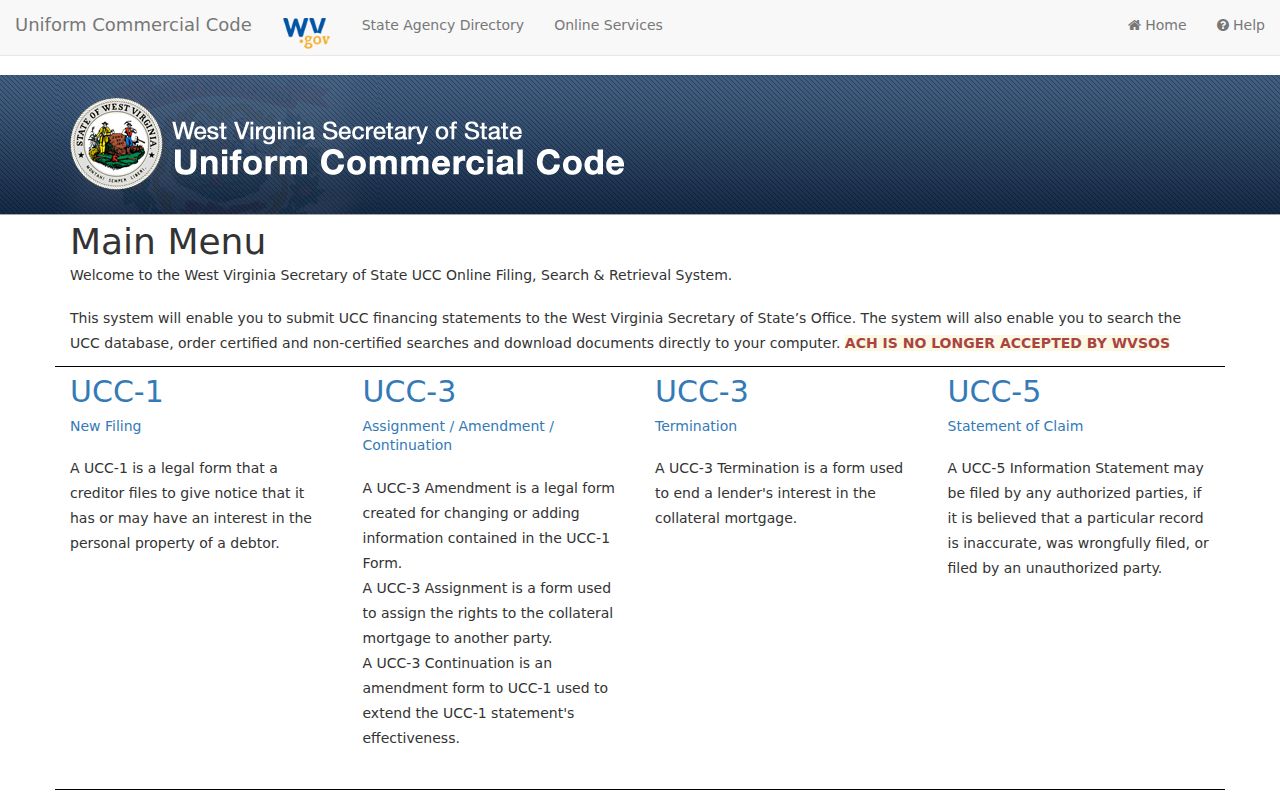
The UCC screen is a state source, separate from county land records. Match any fixture filing or real-estate reference back to the County Clerk's deed records before drawing conclusions.
Barbour County Plats and Access Rights
A recorded plat names the subdivision, lot, block, road, and any easement. Deeds often incorporate the plat by reference. Search the County Clerk's land records for the plat first. Then check later replats, vacations, and corrective deeds. The Assessor tax map and GIS viewer help you find the parcel. Neither replaces the recorded plat or a survey.
An easement grants a defined use over land. It might allow access, utilities, or drainage. Read its location, width, parties, and conditions. Search the related parcel and adjoining ownership. Then check whether later records amend or release it. A line on a GIS screen can orient you. The instrument controls what was actually recorded.
Barbour charges $10 to record a plat not filed with a deed, under §59-1-10. The county map-card screen says card copies require a visit to the Assessor office. For a subdivision question, ask the Clerk for the recorded map. Ask the Assessor for the matching parcel card.
Barbour County Tax Sale Deeds
The Sheriff Tax Office publishes unpaid taxes after April 30. It holds an annual land sale. Redemption questions go to the West Virginia State Auditor. Tax-sale notices and deeds follow West Virginia Code chapter 11A. A tax sale runs on notice and redemption steps. A short portal label cannot tell you the outcome for a parcel.
Barbour publishes no current sale list or online foreclosure calendar. For a particular tract, check the Sheriff Tax Office. Ask the Auditor about redemption status. Then search the County Clerk for recorded notices and tax-sale instruments. Fees for the statutory trustee report category and tax-sale deeds differ from ordinary deed fees. Verify the current amount and recorded expenses with the custodian.
Keep the stages separate. A delinquent bill, published list, land sale, redemption, and recorded deed are distinct events. Record the date and source for each. Check the description and map-parcel before linking a notice to a property.
Barbour County Court and Deed Trails
A quiet-title case, partition, foreclosure, judgment lien, or lis pendens can appear in court and in the land-record index. The statewide Judiciary page offers circuit and magistrate search modes for all 55 counties. It shows those two routes but no embedded search fields or sample Barbour docket. The local Circuit Clerk remains the fallback for case files and copy details.
The West Virginia Court Record Access page is the starting point. A docket logs court events. It is not the complete title record. Ask the Clerk for the case number, status, orders, and any linked property description. A lis pendens signals a claim, but the underlying case must be read first.
Federal bankruptcy and federal litigation belong in PACER. A state or county result will not show every federal matter. Confirm the name match involves the same person and parcel before treating it as relevant. The statewide court access page shows the available state search routes.
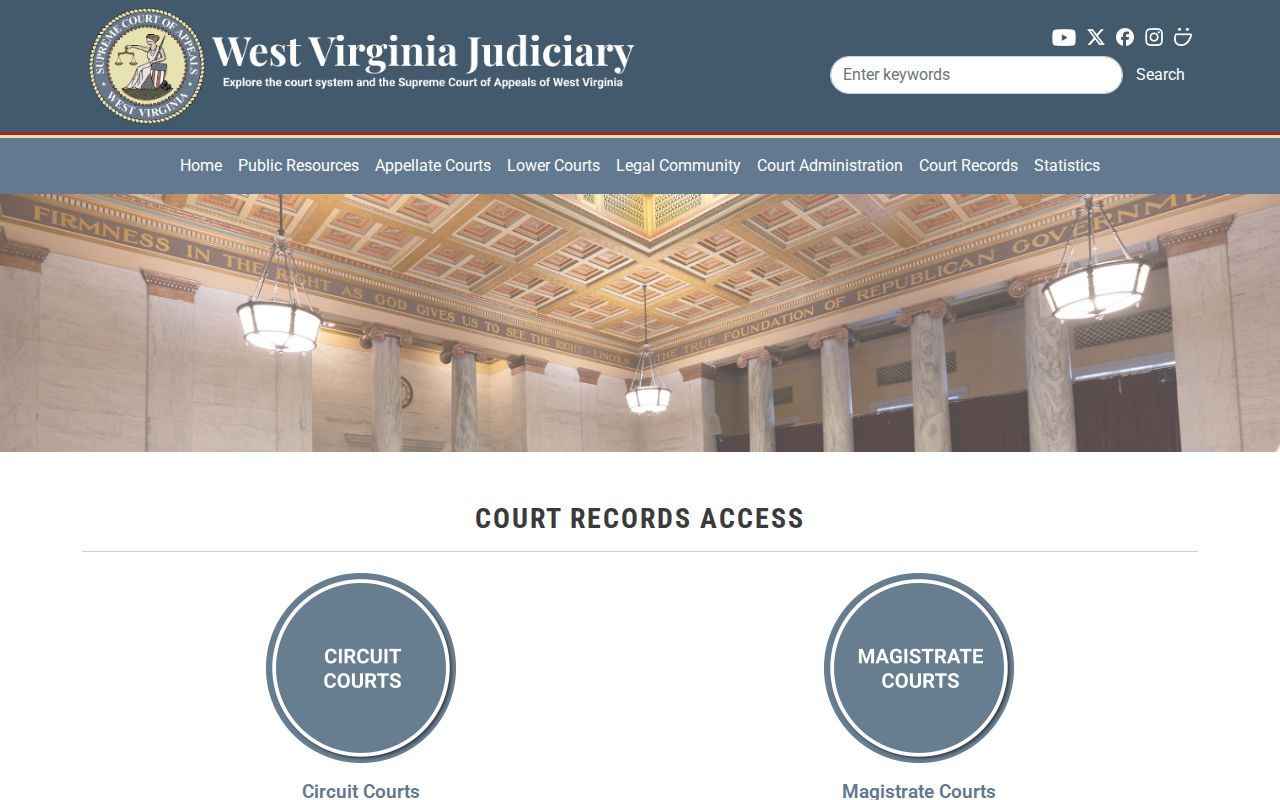
The court search page displays the two available statewide search routes. The local case file may still be needed to inspect orders or attachments.
Barbour County Probate Transfers
Probate can explain why a deed chain shifts from an individual to an estate, executor, administrator, heir, or trust. The County Clerk maintains wills and estates. The county Document Center offers estate process and proof-of-claim material. An estate file may identify a fiduciary, heirs, inventory, appraisement, or an order authorizing a transfer. The later deed or order is still the instrument to match to the land description.
A death certificate proves a death. It does not convey title. Look instead for the probate order, fiduciary deed, survivorship language, or later recorded transfer. Ask the Clerk which years and formats can be inspected at the office, since Barbour's online deed coverage and probate index access are limited. Then compare the book reference with the assessor parcel.
Names shift after marriage, death, or an entity change. Search the person, estate, and fiduciary labels. Then check the description. Do not stop when the first index result looks plausible.
Copies of Barbour County Deeds
The County Clerk lists an online Document Inquiry. It does not load reliably for every visitor, so plan on a call. The statewide Cott information describes paid account access, index and image availability, and page pricing, but Barbour's participation and historical cutover are not shown there. Ask which image format exists and whether the Clerk can provide a certified copy.
At the counter, supply a grantor or grantee name, date range, book and page, parcel number, or legal description. Ask for a copy estimate and current payment details. The Clerk's office is at 26 N. Main, Philippi; Pamela Spencer's phone is (304) 457-2232. A specific West Virginia FOIA request can name the instrument or parcel and ask for actual reproduction costs. The law does not allow a search-labor charge.
Recorded is not the same as guaranteed. A deed copy shows what was filed. A complete title review checks the chain, liens, releases, probate and court claims. Ask a title professional or attorney when the result will guide a purchase or legal decision.