
Trace Former Barbour County Owners
Tracing former owners of Barbour County property works backward from one known parcel. Start with the newest deed reference. Note the parties, deed type, and legal description. Then hunt for the prior transfer of the same land, comparing dates and descriptions at every step so two same-named grantors never blur together. Names shift across spelling quirks, estates, trusts, and entities. An online index points the way, but only the filed instrument confirms what the deed actually says.
| Transfer date | Grantor to grantee | Deed type | Book / page |
|---|---|---|---|
| Read from the filed deed | Copy both parties exactly | Use the instrument heading | Record the Clerk reference |
| Prior recorded transfer | Search this grantee as grantor | Compare stated conveyance | Carry the next book/page back |
| Older instrument | Check name variants and estate labels | Read the actual document | Ask whether book, scan, or film exists |
This is a worksheet, not a sample transaction. No owner names or transfer dates appear here. Keep the map-parcel and legal description beside every entry, because street addresses change over time.
Walk the Barbour County Deed Chain
A chain of title is the set of linked transfers for one piece of land. The grantor conveys the interest. The grantee receives it. One deed's grantee becomes the next deed's grantor. In Barbour County, always search the name and the legal description together. Name-only results can mix two people who share a name, or miss a transfer entirely when an estate or company held title.
- Read the latest deed and copy the grantor, grantee, recording reference, date, and complete description.
- Search the grantee as a grantor to find the next transfer backward.
- Use that earlier deed’s grantee as the next name to trace.
- Compare parcel, lot/block or metes-and-bounds calls at every step.
- Stop and ask the Clerk when the index or description no longer connects cleanly.
- Quitclaim
- Transfers whatever interest the grantor held, without broad title promises.
- Warranty deed
- A conveyance with stated covenants about title.
- Reverse index
- A search from a later grantee back to that party as grantor.
The index points; the filed instrument controls. If the spelling or the book-and-page text differs, trust the original filed deed over the index entry every time. An index only locates a record.
How Far Barbour County Deeds Reach
Barbour County publishes no clear start year for its online deed index. No digitization date is stated. The oldest searchable volume is not listed either. Never promise a specific online range. The county's land-record history reaches into the nineteenth century, and the County Clerk can confirm which original books and index runs survive. Ask whether a given year lives in the web portal, the bound books, scanned volumes, or microfilm. If it is not online, give the Clerk the parcel description, name variants, the approximate period, and any book-and-page citation. Copies may also sit elsewhere. Ask whether the State Archives, a local museum, the library, or a FamilySearch catalog entry holds one. No specific Barbour deed-book image collection is confirmed.
Coverage is unverified. No public source in the research named the first online Barbour County deed year. Older transfers may require a Clerk or archives search in original books or another verified collection.
Barbour County Book and Page Clue
A 2011 West Virginia Supreme Court memorandum decision cited Barbour County Deed Book 447, Page 100. That citation confirms the local book-and-page form. It reveals nothing about the full index range, and it identifies no parcel for a current search. Carry any volume and page from a court opinion or old deed straight to the County Clerk. Read the deed itself. Do not stop at the citation. Note the parties, execution and recording dates, legal description, deed type, and any prior instrument or plat the text names. Old descriptions often point to an adjoining owner, a creek, a road, a district, or a tract rather than a street number. The index entry and image are not online. Call the Clerk at (304) 457-2232 before traveling. Ask how the volume can be inspected and copied.
Barbour County Probate in the Chain
A death can break a clean person-to-person deed trail. Barbour County probate files may name the decedent and an executor or administrator. They may also list heirs, an inventory, an appraisal, and a court-authorized transfer. Wills and estate records sit with the County Clerk. The county Document Center links estate process and proof-of-claim information. Search the estate name and the fiduciary beside the land description. A death certificate proves a death. It does not convey land. Title changes through a probate order, a fiduciary deed, survivorship language, or a later deed. West Virginia death records open to the public after 50 years. Before that, certified access is limited. The recorded instrument controls, not a family-history entry. When an estate file and a deed describe the land differently, ask the Clerk for the recorded source. Compare the map-parcel. A missing step deserves a custodian check, never an inferred transfer.
Barbour County Name Variants
Older deeds often spell a name differently from the current assessor record. Expect initials, married names, estate designations, trustees, and entity forms. Search each person as grantor and as grantee, then try reasonable variants. The parcel, adjoining owners, and legal description sort the results. A name match alone never places an instrument in a chain. An LLC changes the game. The West Virginia Secretary of State Business Entity Search shows its type, status, registered address, creation date, and agent. The state record explains the name. Only the land instrument connects it to the parcel. Ask for the fiduciary or trust deed behind it. Write down the exact spelling in every record. Never quietly normalize an old name into its modern form. The original spelling is what the deed index respects.
Barbour County Local History Leads
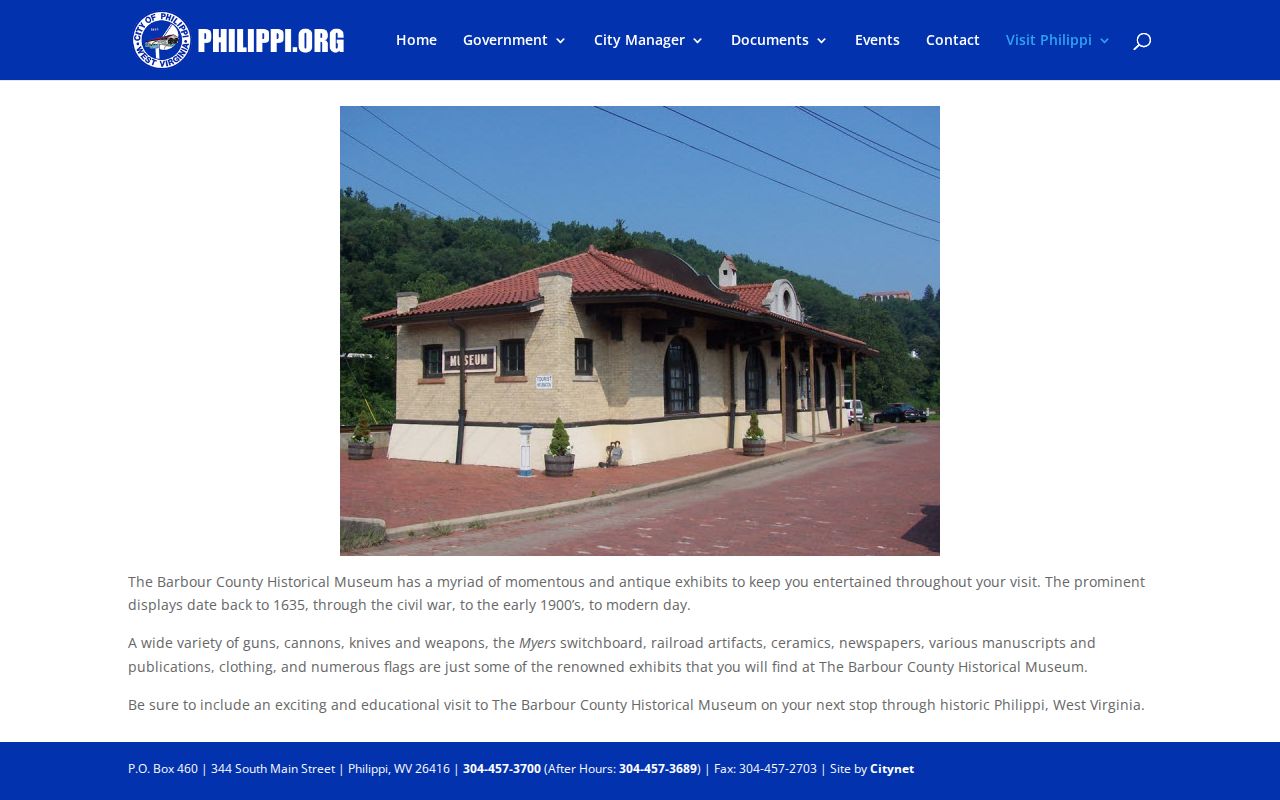
The museum page belongs to the Barbour County Historical Museum. The museum is housed in a former Philippi railroad station. Its collections include newspapers, manuscripts, photographs, and railroad artifacts. Local exhibits there can explain a building's past or a street's old name. A former business becomes easier to place with that kind of context. A vanished landmark does too. Treat the museum as supporting history, though, not as deed records or proof of ownership. Hours and fees are not published there, so plan accordingly before a visit.
A newspaper reference can pin down a date or an occupant. Then carry that name back to the Clerk's deed records. That step documents the land transfer itself.
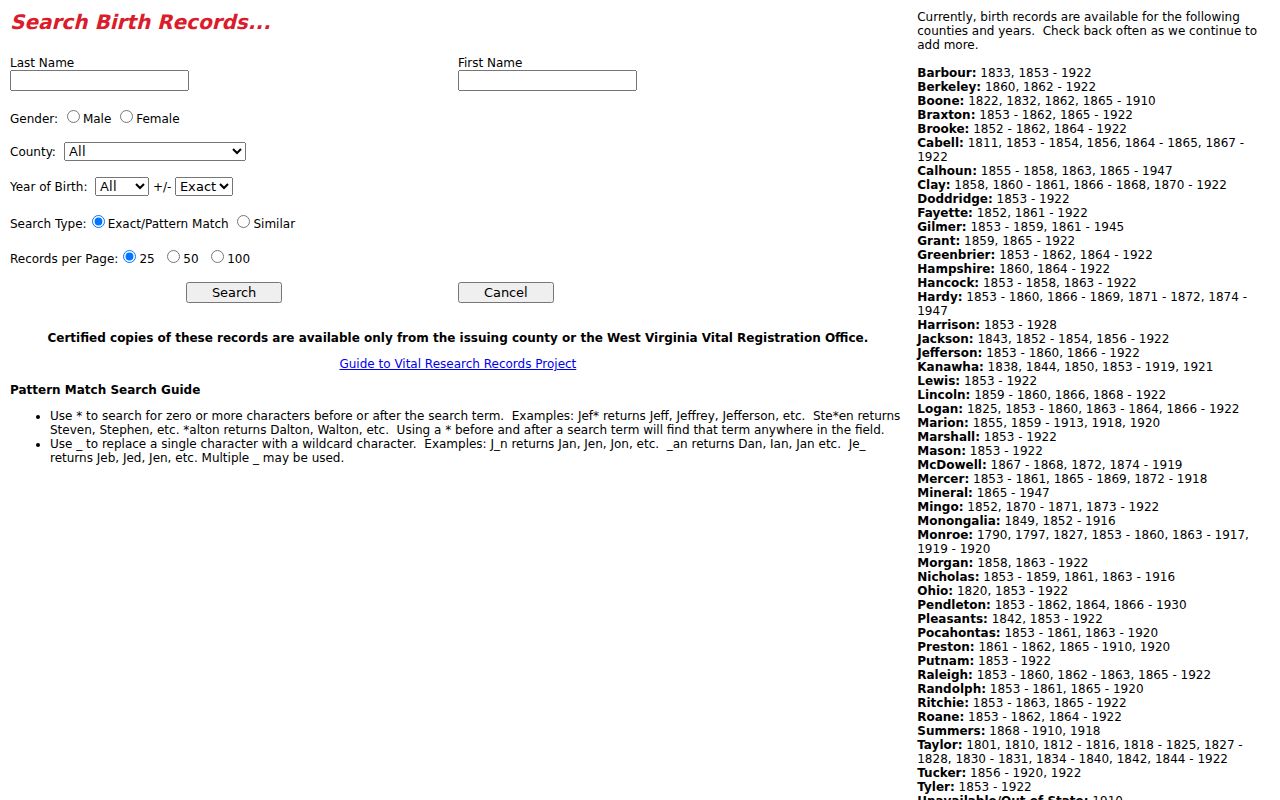
The West Virginia Archives birth index covers Barbour County entries for 1833. It also covers 1853 through 1922. Its search fields include name, gender, county, birth year, and match mode. Results can come back in 25, 50, or 100 rows. The Archives index supports exact, pattern, or similar matching. An entry from this index helps build a family timeline. It is not a certified copy. It is not title evidence.
The index points toward a family record. Probate files and recorded deeds still establish who held the land.
An index entry is a lead, not a conclusion. Recorded deeds and probate records build the chain that proves the transfer.
Why Barbour County Addresses Fail
An address is a modern search key. An old Barbour County deed, by contrast, may describe a tract by its calls. It might also cite a stream, the district, an adjoining owner, or a subdivision lot. E911 addressing can assign a newer road address. That can happen long after the original land description was recorded. Barbour's own addressing form asks for the road, nearest intersection, driveway distance, tax parcel, subdivision and lot, flood permit, and a map. Each answer becomes a clue for the next search.
The parcel number is the bridge between the present map and the earlier deed. Keep the leading zeroes and any suffix intact. A ZIP or city label can cross an incorporated boundary. A renamed or rural road can make an address search look empty. Even then, the parcel exists.
For older owners, the strongest chain joins deed descriptions across each grantor and grantee. The address orients the search. The legal description tells you whether the prior deed concerns the same land.